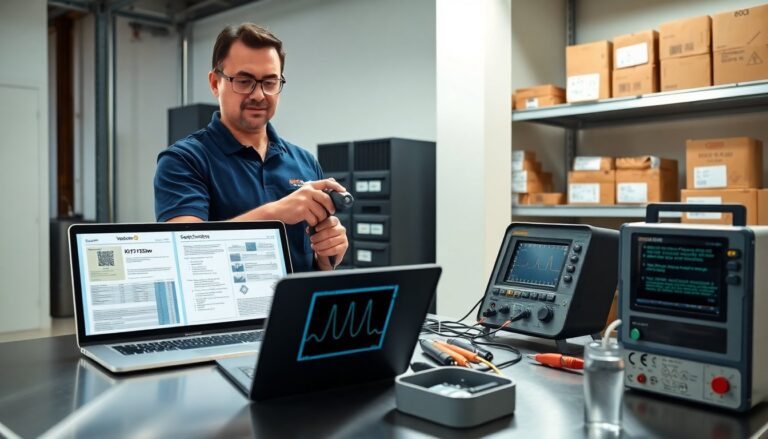
Аутопалър is a term that describes a device or process that moves or adjusts objects automatically. It appears in technical and consumer contexts. This guide explains the main meaning, common uses, basic parts, and risks. It also gives practical advice for people who plan to buy or test an аутопалър. The article stays direct and factual to help readers decide quickly.
Table of Contents
ToggleKey Takeaways
- Аутопалър devices automate positioning tasks, reducing manual labor and increasing productivity across industrial and consumer applications.
- Core components of an аутопалър include a drive motor, sensors, a controller, and a mechanical interface for precise and repeatable movements.
- Using an аутопалър helps improve accuracy, speed, and worker safety by minimizing errors and physical strain in repetitive tasks.
- Choosing the right аутопалър requires evaluating payload capacity, control options, sensor types, and environmental suitability based on specific task needs.
- Proper installation, calibration, and regular maintenance are essential to ensure аутопалър devices operate safely and effectively over time.
- Awareness of risks such as overheating, misalignment, and safety hazards calls for proper guarding, emergency stops, and user training when using an аутопалър.
What ‘Аутопалър’ Means and Why It Matters
Аутопалър refers to a machine, tool, or software that performs automated positioning or handling tasks. Engineers use the word to name systems that move parts, align items, or apply forces without human guidance. Consumers use the word for gadgets that adjust displays, furniture, or appliance elements automatically. The term matters because it signals reduced manual work, faster cycles, and repeatable results. When a buyer sees аутопалър in a spec sheet, they should expect automation features, sensors, and safety measures. The presence of аутопалър can raise productivity and lower error rates.
Origins, Typical Uses, and Related Terms
The label аутопалър likely comes from a blend of words that mean “auto” and “palpate” or “pal” for handling. Manufacturers adopted the term in the 2010s for small industrial actuators and home-assist devices. Typical uses include factory pick-and-place stations, adjustable monitor arms, robotic grippers, and motorized furniture. Related English terms include actuator, manipulator, servomotor system, and positioning unit. Technical lists often pair аутопалър with sensors, controllers, and feedback loops. In plain settings, people call the same product a motorized adjuster or an auto-positioner.
How Аутопалър Works: Key Components or Mechanisms
An аутопалър usually contains a drive, a sensor, a controller, and a mechanical interface. The drive provides motion through a motor, pneumatic cylinder, or linear actuator. The sensor detects position, force, or presence. The controller reads the sensor and sends commands to the drive. The mechanical interface links the device to the target item with bolts, clips, or a mounting plate. Some models add feedback channels for closed-loop control. Other versions use simple on/off switches for repeat tasks. Together, these parts let the аутопалър move items with set speed and accuracy.
Practical Benefits and Common Applications
Аутопалър units cut manual labor in repetitive tasks. They increase throughput on assembly lines and reduce misalignment in soldering or gluing jobs. In offices, аутопалър monitor arms free up desk space and ease ergonomic strain. In homes, motorized furniture helps people with mobility limits. Service technicians use portable аутопалър tools to position cameras or sensors for inspections. Small factories use compact аутопалър to run night shifts without extra staff. The benefits include consistent results, higher speed, and lower worker fatigue. Buyers see a return when the device reduces cycle time or error cost.
Risks, Limitations, and When to Be Cautious
Аутопалър can fail if someone ignores safety rules or picks a wrong specification. Motors can overheat and sensors can misread signals. The device can pinch or crush items and hands when people work too close. It can also misplace parts if calibration drifts. Users must check payload limits and duty cycle ratings. They must verify environmental ratings for dust and moisture. Some low-cost аутопалър units skip proper shielding or use weak mounts. Professionals should add guards and emergency stops when the device operates near people. Users should expect maintenance and occasional recalibration.
How to Choose or Evaluate an Аутопалър (Buying/Adoption Checklist)
Start by listing task needs: weight, travel distance, speed, and repeatability. Check the аутопалър data sheet for payload, travel range, accuracy, and duty cycle. Confirm the power type: electric, pneumatic, or hydraulic. Inspect control options: simple relay, programmable controller, or networked interface. Review sensor types and feedback support. Ask about mounts, spare parts, and local service. Test the unit under real load and record performance for a short run. Compare warranties and return policies. Finally, cost out installation, training, and regular maintenance.
Frequently Asked Implementation Steps or Best Practices
Plan the installation layout and mark safe zones. Mount the аутопалър on a firm base and tighten all fasteners. Connect power and route cables away from moving parts. Calibrate position sensors under the actual load. Program the controller with speed and limit settings. Add physical guards and label emergency stops. Run gradual test cycles and monitor temperature and noise. Log errors and inspect mounts after 24 hours of operation. Train staff on safe interaction and basic troubleshooting. Schedule routine checks for wear and alignment.