Photoacimpa is a method that processes images and data for automated decision tasks. It combines visual input, signal filters, and lightweight models to extract features. It runs on edge devices and cloud services. It speeds tasks such as detection, classification, and simple prediction. This article defines photoacimpa, describes how it works, and lists practical uses for 2026.
Table of Contents
ToggleKey Takeaways
- Photoacimpa enables fast, low-power image processing for automated tasks by combining photographic input with acoustic-inspired feature extraction.
- Its core workflow reduces input complexity and applies lightweight models, making it ideal for edge devices and cloud integration.
- Photoacimpa balances accuracy and efficiency, supporting privacy by processing data locally and minimizing latency and energy use.
- The method is widely applied in retail shelf monitoring, transportation incident detection, home occupancy sensing, agriculture, security, and medical screening.
- Photoacimpa’s modular design uses cameras, preprocessors, feature extractors, models, and controllers to deliver reliable, cost-effective results.
- Organizations adopt photoacimpa to achieve real-time decision-making with lower bandwidth and power consumption while maintaining scalable cloud fallback for complex cases.
What Is Photoacimpa? Origins, Definitions, and Why It Matters
Photoacimpa began as an experimental tool in academic labs in the late 2020s. Researchers built photoacimpa to process raw visual data with low compute cost. The term photoacimpa refers to the combination of photographic input and acoustic-inspired processing steps. It emphasizes fast feature extraction and low-power inference. Photoacimpa matters because it lets devices analyze images without heavy models. It reduces latency and lowers energy use. Many teams adopt photoacimpa for on-device tasks. Corporations use photoacimpa to meet privacy rules. Engineers choose photoacimpa when they must keep data local. Developers can carry out photoacimpa with open libraries and simple preprocessors. The community published benchmarks that show photoacimpa matches larger pipelines on many routine tasks. Policy teams value photoacimpa for its predictable compute profile. In short, photoacimpa offers a practical trade-off between accuracy and cost.
How Photoacimpa Works: Key Principles and Processes
Photoacimpa follows three core principles. First, it reduces input complexity. Second, it converts visual patterns into compact representations. Third, it runs small models on those representations. The system takes a photo, applies guided filters, and extracts features. It compresses features and runs an inference step. Teams tune photoacimpa to the task and device. Photoacimpa pipelines often include temporal smoothing for video. They also include confidence checks to avoid false signals. The pipeline logs minimal metadata for debugging. Engineers deploy photoacimpa on edge units and cloud nodes. They update models with small deltas to keep behavior stable. Photoacimpa works with standard cameras and sensors. It handles noise and variable light by using adaptive preprocessing. It combines classical filters with light neural layers. Those layers provide the final task output, such as a label or a score.
Core Components And Technical Workflow
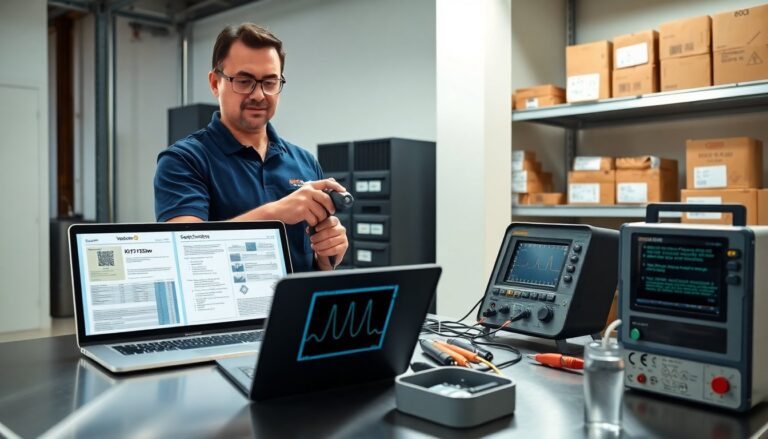
Photoacimpa uses five core components. The camera captures images. The preprocessor cleans and normalizes frames. The extractor computes compact features. The model maps features to outputs. The controller handles deployment and updates. The camera sends frames to the preprocessor. The preprocessor reduces resolution and removes artifacts. The extractor applies band filters and edge operators to form feature vectors. The model runs a small classifier or regressor on those vectors. The controller enforces thresholds and sends alerts when needed. Teams design each component to use minimal memory. They measure throughput and energy per frame. They iterate on extractor design to improve accuracy. Developers favor simple math and sparse matrices for speed. They also add a fallback path that sends frames to the cloud when confidence is low. This fallback keeps accuracy high while still using photoacimpa as the main path.
Practical Applications: Real-World Use Cases And Benefits
Retail teams use photoacimpa for shelf monitoring. The system flags missing items and damaged packaging. Photoacimpa runs on low-cost cameras and reports counts in real time. Transportation agencies use photoacimpa for simple incident detection. It detects stalled vehicles and debris without sending all video to a central server. Photoacimpa saves bandwidth and speeds response. Home device makers use photoacimpa for occupancy detection. The device knows when a room is occupied and adjusts settings. Photoacimpa preserves privacy by keeping raw frames local. Agriculture teams use photoacimpa to spot crop stress and pest presence. They deploy solar-powered nodes running photoacimpa to scan fields. Security teams use photoacimpa for entry-point checks and tailgating alerts. Photoacimpa reduces false alarms by combining visual features with temporal rules. Medical device firms use photoacimpa for simple screening tasks at the point of care. They pair photoacimpa with sensors to detect visible signs that merit further testing. Researchers apply photoacimpa in wildlife monitoring to count animals with limited battery life. They choose photoacimpa because it extends mission time. Across these use cases, photoacimpa delivers lower cost, faster action, and better privacy control. Teams that adopt photoacimpa trade some raw accuracy for practical gains in speed and cost. They often keep a cloud path for complex cases while relying on photoacimpa for day-to-day needs.