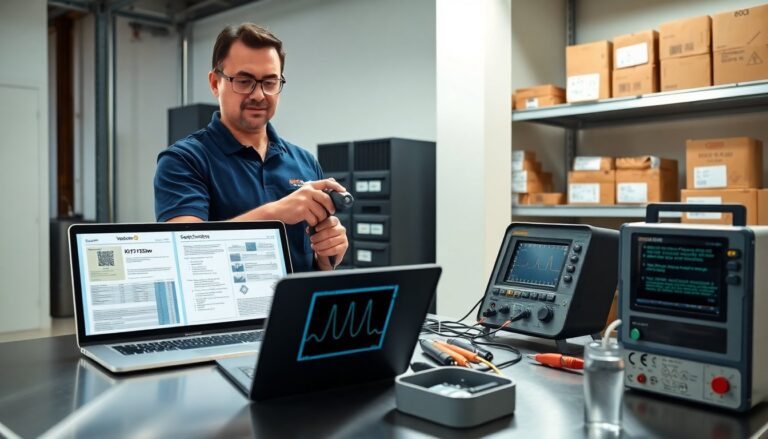
Radiation monitoring plays an important role in protecting workers, the public, and the environment in industries where ionising radiation may be present. From healthcare facilities and research laboratories to industrial inspection and nuclear operations, reliable radiation detection equipment helps identify potential hazards and supports compliance with established safety procedures. Portable instruments are particularly valuable because they allow measurements to be taken directly at the point of use.
A portable radiation meter is a handheld instrument designed to detect and measure ionising radiation in a variety of environments. Depending on the detector technology, these devices can measure alpha, beta, gamma, or X-ray radiation and provide real-time readings that help users assess radiation levels quickly. Portable radiation meters are widely used for routine inspections, contamination surveys, emergency response, and occupational radiation protection.
Table of Contents
ToggleHow Portable Radiation Meters Work
Radiation meters use specialised sensors that respond when ionising radiation interacts with the detector. One of the most widely recognised technologies is the Geiger–Müller (GM) tube, which detects radiation by measuring the ionisation produced inside a gas-filled chamber. Other instruments may use scintillation detectors or ionisation chambers, depending on the level of sensitivity and the type of radiation that needs to be measured.
Many modern portable meters display measurements digitally and may include audible alarms, data logging, adjustable alert thresholds, and multiple measurement units. These features allow users to identify changes in radiation levels quickly and respond appropriately during routine monitoring or emergency situations.
Common Applications Across Industries
Portable radiation meters are used in a wide range of industries where radiation safety is essential. Healthcare facilities use them to monitor X-ray rooms, nuclear medicine departments, and radiotherapy equipment. Industrial organisations employ them during non-destructive testing (NDT), where radioactive sources are used to inspect welds and structural components.
Other common applications include:
- Nuclear power plants
- Research laboratories
- Environmental monitoring
- Emergency response teams
- Mining operations
- Radioactive material transport
- Waste management facilities
These instruments are also used to inspect personnel, equipment, and work areas for radioactive contamination before individuals leave controlled environments.
For engineers, safety officers, laboratory personnel, and industrial users evaluating available equipment, exploring portable radiation meter solutions can provide insight into instruments designed for different monitoring applications and radiation types.
Factors to Consider When Choosing a Radiation Meter
Selecting the right instrument depends on the intended application and the type of radiation that needs to be detected. Different detector technologies offer different levels of sensitivity and measurement capability.
Important considerations include:
- Types of radiation detected
- Measurement range
- Detector sensitivity
- Response time
- Display readability
- Battery operating time
- Alarm functions
- Environmental durability
For example, Geiger counters are commonly used for detecting alpha, beta, and gamma radiation during general surveys, while ionisation chambers are often preferred when measuring higher dose rates or X-ray exposure more accurately. Choosing an instrument that matches operational requirements helps ensure dependable and meaningful measurements.
Best Practices for Safe and Accurate Monitoring
Reliable measurements depend not only on the quality of the instrument but also on proper operating procedures. Radiation meters should be calibrated according to the manufacturer’s recommendations and applicable regulatory requirements to maintain measurement accuracy.
Users should perform routine functional checks before use, inspect the detector for physical damage, and verify battery condition. During surveys, the instrument should be moved at an appropriate speed to ensure sufficient detection time, particularly when searching for small contaminated areas.
Personnel working with radioactive materials should also follow established radiation protection principles, including minimising exposure time, maximising distance from radiation sources, and using appropriate shielding whenever possible. Portable monitoring equipment supports these practices by providing immediate information about the surrounding radiation environment.
Supporting Radiation Safety Across Industries
As industries continue to adopt advanced technologies involving radioactive materials and radiation-producing equipment, reliable monitoring remains an essential part of workplace safety. Improvements in detector technology, digital electronics, and battery efficiency have made portable radiation meters more accurate, compact, and easier to operate than earlier generations of equipment.
Whether used in healthcare, industrial inspection, research, or environmental monitoring, these instruments provide valuable information that supports informed safety decisions and regulatory compliance. Selecting equipment that matches the intended application helps ensure effective radiation monitoring while contributing to safer working environments.
Whether performing routine workplace surveys or responding to specialised monitoring requirements, a portable radiation meter provides a practical solution for detecting and measuring ionising radiation. Choosing the appropriate instrument helps improve safety, supports regulatory compliance, and enables accurate radiation assessment across a wide range of professional applications.